Government Grants for Green Fleet Upgrades 2026: A Strategic Guide for US Fleet Owners
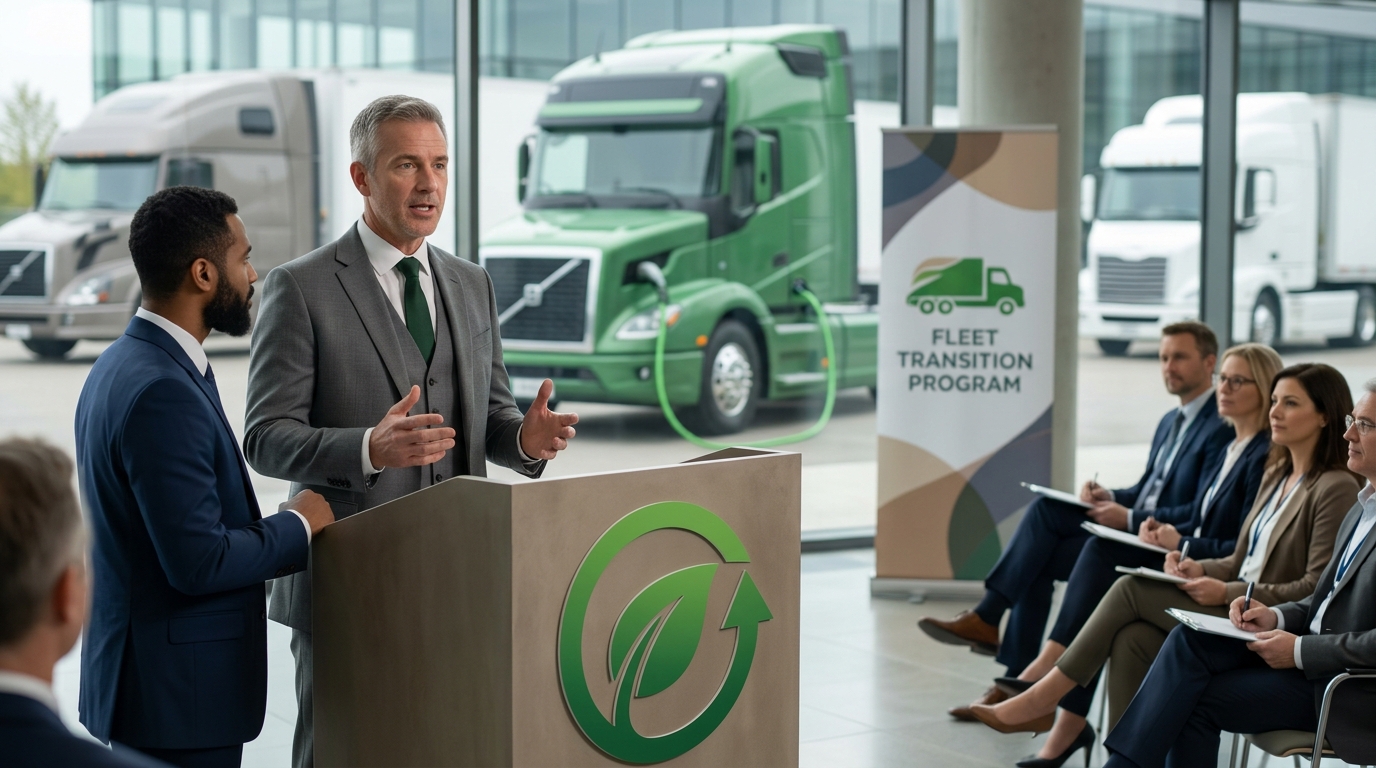
How to fund your transition with 2026 green fleet grants. You can secure funding for green fleet upgrades by leveraging the EPA Clean Heavy-Duty Vehicle Program or regional VW Settlement funds if you operate vehicles meeting specific weight-class requirements. Click the button below to see if your fleet qualifies for current grant windows. While commercial truck financing rates 2026 remain a primary concern for many owners, government grants provide a non-dilutive path to transition to electric or hydrogen-powered vehicles. Currently, the federal government has earmarked over $2.5 billion for zero-emission infrastructure. To participate, you must identify whether your trucks are Class 6, 7, or 8, as the majority of federal subsidies are locked to these specific heavy-duty segments. Fleet owners often combine these grants with traditional equipment financing for heavy-duty trucks to cover the delta between the grant amount and the total capital expenditure. Speed is essential, as grant cycles for 2026 have specific windows that close rapidly once funding thresholds are met. Preparing your balance sheet now, rather than waiting for the grant award, is the standard practice for successful fleet operators who cannot afford downtime. In 2026, the complexity of application packets has increased, requiring detailed environmental impact statements alongside financial projections, but the high capital cost of new electric vehicles makes this non-dilutive capital essential for maintaining competitive operating margins over the next five-year cycle.
How to qualify. 1. Entity Verification: You must be a registered US-based business with an active DOT and MC number. Most grants require at least 24 months of operational history to prove you are a stable entity capable of managing fleet infrastructure. 2. Credit and Financial Health: While grants are not loans, lenders who provide matching funds—the capital required to bridge the gap before grant reimbursement—will look for a FICO score of 650 or higher and at least $500,000 in annual gross revenue to approve your credit facility. 3. Fleet Audit: You need a detailed inventory of your current ICE (Internal Combustion Engine) fleet. Documentation must include VINs, current fuel consumption metrics, and projected mileage for the next 36 months to verify the emissions-reduction potential. 4. Technical Feasibility: You must provide a site plan for charging or hydrogen refueling stations. If your current depot lacks the power capacity, you must include a letter of intent from your local utility provider stating they can support the additional megawatt load. 5. Environmental Compliance Reports: Submit your current emissions output data. Lenders and grant administrators require this to calculate the 'cost-per-ton' of CO2 reduction compared to baseline diesel operations. Applying correctly involves submitting your Form 8821 for tax compliance and a comprehensive business plan that demonstrates how the new vehicles will maintain or exceed current delivery SLAs. Most successful applicants engage a specialized consultant to manage the filing process, as errors in the paperwork lead to automatic disqualification in high-volume funding cycles, resulting in a complete loss of the grant opportunity for that fiscal year.
Pros and Cons of Green Upgrades. Choosing between a government grant-funded purchase and a traditional lease requires analyzing your long-term cash flow and tax implications. ### Pros of Grants: Grants reduce the total cost of ownership significantly, often covering up to 40% of the price premium for electric trucks. They eliminate the interest cost associated with that specific portion of the capital, drastically improving your ROI on fleet expansion and lowering your debt-to-equity ratio. ### Cons of Grants: The application process is notoriously slow and competitive. You may be waiting 6 to 12 months for fund disbursement, which forces many owners to look into trucking company bridge financing to keep operations moving in the interim while waiting for cash to clear. ### Strategic Selection: If your fleet expansion timeline is flexible, pursue the grants and wait for disbursement. If you have immediate cargo commitments, prioritize equipment financing and treat the potential grant as a future rebate or debt-reduction mechanism, effectively paying down the principal once the grant arrives.
What is the most popular source of green funding in 2026?: The most popular and accessible source remains the EPA's Clean Heavy-Duty Vehicle Program, which provides billions in direct rebates for replacing legacy diesel engines, specifically targeting school buses and Class 8 drayage vehicles. Do I need perfect credit for matching funds?: You do not need perfect credit, but lenders typically require a credit score of at least 650 to approve the bridge loans necessary to secure the vehicles before the government subsidy hits your bank account. How do fleet expansion loans for trucking companies work with grants?: You apply for the loan to cover the full purchase price upfront, and upon receipt of the grant, you perform a principal-only payment to reduce your loan balance, effectively refinancing your commercial truck loans to lower monthly payments.
Background and Implementation. Understanding the mechanics of green fleet financing requires a grasp of how federal agencies interact with commercial lenders. According to the U.S. Department of Energy (https://www.energy.gov), public-private partnerships are currently funding over $3.2 billion in corridor electrification projects as of early 2026. This infrastructure investment is designed to lower the total cost of ownership for private fleet operators by reducing the burden of private charging installation. Furthermore, according to the Bureau of Transportation Statistics (https://www.bts.gov), fuel costs account for approximately 25% of annual operating expenses for long-haul carriers, making the transition to electric units a primary driver for fleet efficiency in the 2026 business climate. When you integrate these grants, you are essentially trading administrative time and rigorous documentation for lower-cost capital. The process typically starts by identifying the appropriate state-level agency, such as the California Air Resources Board (CARB) or similar entities in states with high-adoption mandates. These agencies often issue 'Request for Applications' (RFA) that contain specific requirements for vehicle class, range, and duty cycle. Once you have identified a suitable grant window, you must secure a 'conditional' lender agreement. This document demonstrates to the grantor that you have the necessary capital to complete the project, even if the grant funds are delayed. This 'bridge' component is critical; without it, many fleet owners are forced to abandon projects because they cannot bridge the six-to-twelve-month gap between vehicle acquisition and grant disbursement. By utilizing a hybrid model—combining federal grant equity with private lending debt—you maximize your liquidity while simultaneously modernizing your fleet for 2026 emissions standards. This strategic alignment ensures that you are not only meeting regulatory requirements but also building a more resilient, lower-maintenance fleet that outperforms competitors still relying on older diesel technology.
Bottom line
Securing government funding for your fleet is a complex process that demands early preparation and robust financial backing to bridge the gap between acquisition and reimbursement. By focusing on your credit health and choosing lenders familiar with grant-backed projects, you can significantly reduce your total fleet expenditure.
Disclosures
This content is for educational purposes only and is not financial advice. fleetowners.news may receive compensation from partner lenders, which may influence which products are featured. Rates, terms, and availability vary by lender and applicant qualifications.
Ready to check your rate?
Pre-qualifying takes 2 minutes and won't affect your credit score.
See if you qualify →Frequently asked questions
What is the primary EPA grant program for trucking fleets in 2026?
The EPA Clean Heavy-Duty Vehicle Program is the main federal source, focusing on replacing legacy diesel engines with zero-emission alternatives for Class 6, 7, and 8 vehicles.
Can I use commercial truck financing if I am waiting for a grant?
Yes, many fleet owners use bridge financing or equipment loans to acquire vehicles immediately, then apply the grant funds as a lump-sum payment to pay down the principal.
What credit score is required to secure bridge funding for my fleet?
Most specialized lenders look for a FICO score of 650 or higher, along with 24 months of business history and consistent revenue, to approve bridge loans for green upgrades.