Government Grants and Loans for Green Fleet Upgrades 2026: Your Financing Roadmap
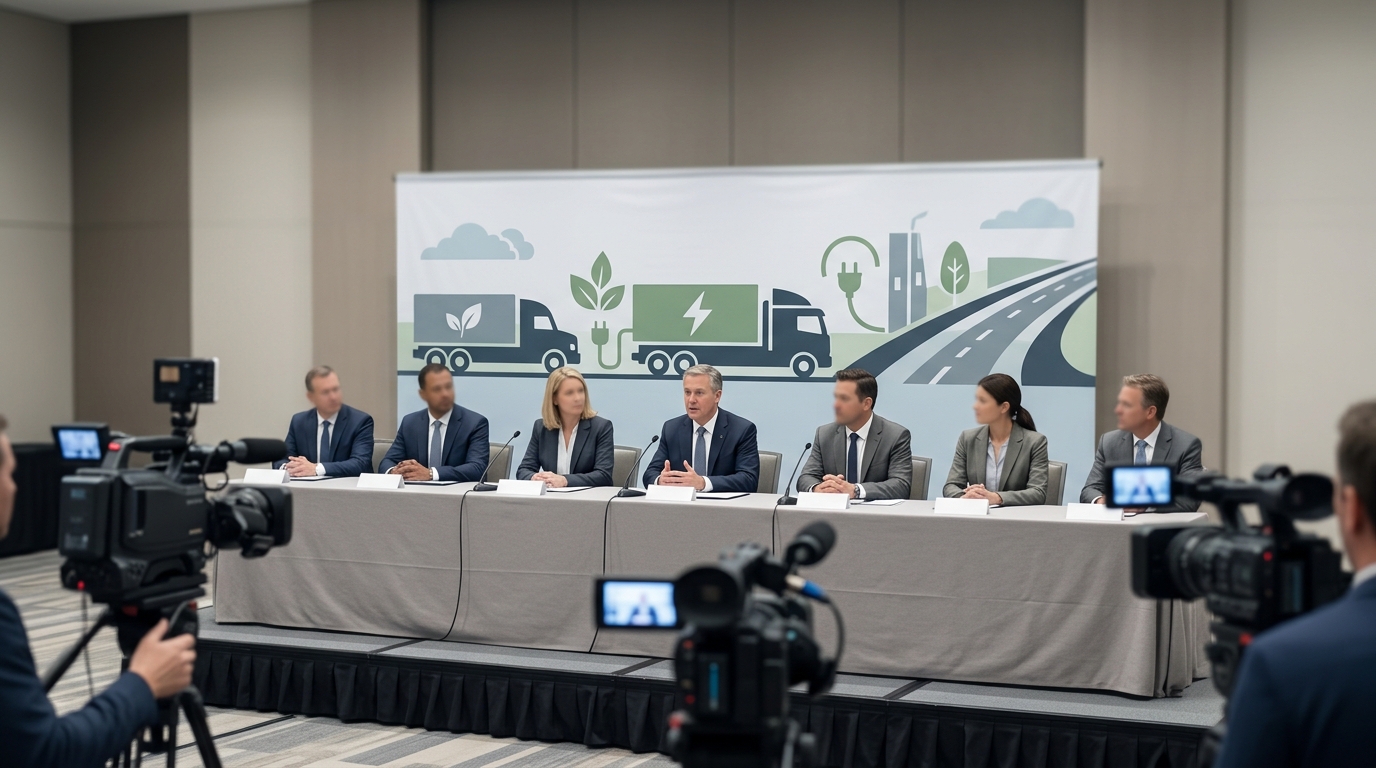
How to fund your green fleet transition today
You can access government-backed funding for green fleet upgrades by stacking federal tax credits with state-level voucher programs if you meet minimum fleet utilization and emission reduction standards. See if you qualify now.
If you are ready to move, the primary path in 2026 involves utilizing the Commercial Clean Vehicle Credit (Section 45W) to offset the purchase price of electric or hydrogen-powered heavy-duty trucks. This federal incentive allows for a credit of up to $40,000 per vehicle for commercial vehicles with a gross vehicle weight rating (GVWR) of over 14,000 pounds. Unlike historical grant programs that required years of waiting, these tax credits are now directly transferable to the dealer, meaning you get the discount at the point of sale, effectively reducing your required capital outlay upfront.
Simultaneously, you should pair this with regional funding. For instance, the California Hybrid and Zero-Emission Truck and Bus Voucher Incentive Project (HVIP) continues to operate as a blueprint for other states. Many state agencies now offer bridge loans—specifically trucking company bridge financing—designed to cover the gap between ordering a zero-emission vehicle and receiving the final delivery. By aligning federal tax incentives with these local vouchers, fleets are effectively lowering their total cost of ownership (TCO) to parity with traditional diesel units. This is not about long-term ROI projections; it is about immediate cash flow management and reducing the effective interest rates on your heavy-duty truck equipment financing.
How to qualify
Qualifying for government-subsidized green fleet funding requires a structured approach to documentation and compliance. Because these funds are public, the audit trail is non-negotiable. Here are the concrete steps and thresholds required to secure funding in 2026:
- Establish Fleet Baseline Emissions: You must provide historical fuel usage data for the past 24 months. Agencies require a clear "before and after" scenario. If you are applying for a DERA grant or a state-specific replacement program, you need proof that the vehicles you are replacing are older than 2012 models to qualify for the maximum funding bracket.
- Financial Standing and Credit Thresholds: While government grants are needs-based, bridge loans to cover the gap still require credit checks. Most lenders providing secondary funding for green upgrades look for a minimum 620 FICO score. If your score is lower, you must demonstrate strong business cash flow—specifically, a debt-service coverage ratio (DSCR) of at least 1.25x over the last three fiscal quarters.
- Business Registration and Compliance: You must have an active USDOT number and proof of current operating authority. Any pending litigation or significant safety violations (defined as a Conditional or Unsatisfactory rating from the FMCSA) will automatically disqualify your application. Ensure your SAFER system data is updated before applying.
- Proof of Purchase or Intent: You need a formal quote from an OEM or certified dealer for the specific vehicle. This document must clearly itemize the vehicle cost, battery capacity, and emission rating. Preliminary approvals are rarely granted without this documentation.
- Revenue Verification: For working capital loans associated with infrastructure (like installing charging stations at your depot), lenders look for at least $500,000 in annual gross revenue. You should be prepared to provide tax returns for the last two years and a current balance sheet not older than 90 days.
Choosing between grants, tax credits, and loans
When optimizing your capital structure for a green transition, you have three primary levers. Each serves a different purpose in your balance sheet management.
Comparison of Green Capital Sources
| Feature | Federal Tax Credits | Government Grants | Private/Bridge Loans |
|---|---|---|---|
| Primary Benefit | Direct price reduction | Zero repayment required | Immediate liquidity |
| Best Used For | New vehicle acquisition | R&D or infrastructure | Bridging delivery gaps |
| Approval Speed | Immediate (at sale) | Slow (6-12 months) | Fast (1-2 weeks) |
| Repayment | None | None | Principal + Interest |
How to choose: If you are managing cash flow constraints, prioritize the Tax Credit. Because it is now point-of-sale transferable, it functions like a down payment assistance program. Do not rely on Grants for immediate vehicle inventory needs; the application-to-award timeline is often too slow for urgent expansion. If you need to secure a unit now while waiting for a grant or tax refund to process, utilize Bridge Financing. Use this specifically to cover the down payment or the initial 6-month operating runway, then pay off the bridge loan once your long-term equipment financing for heavy-duty trucks kicks in. This strategy keeps your interest expenses manageable while maximizing the long-term subsidies available.
Essential answers for fleet managers
What are the realistic commercial truck financing rates for 2026 regarding green upgrades? Green-specific financing often carries interest rates 1% to 2% lower than standard diesel equipment loans due to lender incentives for "green" asset portfolios. You should expect rates between 6.5% and 9.5%, depending on your credit profile and the specific ESG (Environmental, Social, and Governance) targets of your lender.
Can I use bad credit fleet financing for electric vehicles? Yes, but you will pay for it in collateral requirements. Lenders are more willing to overlook a lower credit score if the asset is an electric truck because the long-term maintenance costs are lower and the resale value is currently protected by high demand for zero-emission vehicles. Expect to provide a higher down payment, often 20-30%, to mitigate risk.
Does refinancing commercial truck loans for green upgrades make sense? Only if you can capitalize on the current market environment. If you hold a high-interest loan on an older, inefficient fleet, refinancing into a new green loan structure can reduce your monthly payment by 15-20% through extended terms and lower interest rates provided by green-tech lenders looking to move capital into sustainable assets.
The mechanics of green fleet funding
Understanding why these capital sources exist helps you position your fleet to receive them. The transition to zero-emission logistics is a priority for the current administration, leading to an influx of capital designed to de-risk the shift for independent operators and small-to-mid-sized fleets.
Funding for green fleets essentially works on a policy of incentives designed to overcome the "green premium"—the higher upfront cost of electric or hydrogen trucks compared to internal combustion engines. According to the Environmental Protection Agency (EPA), the transportation sector is the single largest source of greenhouse gas emissions in the United States, which is why federal funding is aggressively skewed toward replacing older, high-polluting vehicles. As of 2026, the strategy has shifted from purely academic research grants to direct-to-fleet financial products.
How these programs work in practice involves a multi-layered approach. First, there is the asset-based funding. When you finance a new battery-electric vehicle (BEV), you are essentially entering into an equipment finance agreement (EFA). The equipment acts as the collateral. However, because these assets are considered "future-proof" by lenders—less prone to the obsolescence that may eventually hit diesel vehicles—the loan-to-value (LTV) ratios are often more favorable. According to the Bureau of Transportation Statistics (BTS), logistics companies that upgraded to high-efficiency fleets saw an average 18% reduction in annual maintenance costs by mid-2026, significantly improving their debt-service capability.
Finally, consider the infrastructure side. Most fleet owners make the mistake of focusing solely on the vehicle. Your loan application should also account for depot charging capabilities. Many state-level energy commissions offer specific low-interest loans for the electrical panel upgrades and charging station installations required for your site. Securing these funds simultaneously with your heavy-duty-truck-expansion is critical. If you buy the truck but cannot charge it, you have essentially financed an unproductive asset. Lenders are looking for holistic business plans that demonstrate you have accounted for the charging infrastructure, the driver training required for new technology, and the necessary maintenance contracts, rather than just the truck payment itself.
Bottom line
Funding a green fleet transition in 2026 is no longer a niche activity; it is a standard capital deployment strategy that relies on stacking transferable tax credits with bridge financing. To succeed, prioritize your documentation and focus on lenders who specifically understand the lower TCO and higher collateral value of zero-emission assets. Apply for your green fleet financing now.
Disclosures
This content is for educational purposes only and is not financial advice. fleetowners.news may receive compensation from partner lenders, which may influence which products are featured. Rates, terms, and availability vary by lender and applicant qualifications.
Ready to check your rate?
Pre-qualifying takes 2 minutes and won't affect your credit score.
See if you qualify →Frequently asked questions
What is the best way to fund electric truck upgrades?
Combining federal tax credits (like the Commercial Clean Vehicle Credit) with state-specific voucher programs is the most cost-effective strategy in 2026.
Can I qualify for green fleet financing with bad credit?
Yes, specialized green equipment financing often focuses on the collateral value of the vehicle rather than personal credit, though higher down payments may be required.
Are there grants specifically for small logistics companies?
Yes, programs like the Diesel Emissions Reduction Act (DERA) prioritize small fleets operating in high-pollution corridors.